


Quick summary for busy readers
-
A mass notification system is the brain that coordinates real time alerts, schedules, and device health across all your sites; it’s not just an emergency siren.
-
When it is tied directly into your paging/intercom network, you get faster alerts, clearer audio, and fewer dead speakers.
-
Terminus Cloud Control™, plus CyberData SIP endpoints and hybrid amplifiers, gives you cloud control and reliable hardware in one ecosystem.
-
You can reuse analog speakers, add IP endpoints where needed, and manage everything from one dashboard – no full rip and replace.
-
Backed by a 5-year warranty, U.S. engineering, and free design services, this becomes an enterprise alert system you can actually trust.
What Is a Mass Notification System? Incident Management Through Critical Events
The use cases are aplenty for needing to quickly and confidently notify people of an event. That can include a busy school campus at the time of dismissal, a retail store during a severe storm warning, or a warehouse running overnight shifts. A mass notification system is the communications switchboard that makes sure the right people hear the right message at the right time, across every zone and every building.
And to be clear, it’s more than a loud buzzer or a single “all call” button. A modern mass communication platform:
-
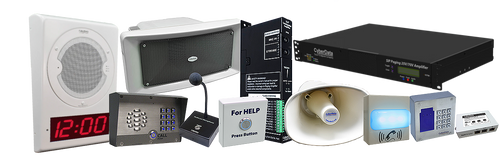
Connects to your paging/intercom speakers, horns, and intercoms
-
Sends emergency alerts, routine announcements, tones, and reminders
-
Logs who sent what, when, and where
-
Monitors whether the hardware is healthy or about to fail
Here is a simple way to think about it:
|
What it does |
How it works in real life |
|
Sends alerts to many locations or buildings at once |
Lockdown message to every classroom and hallway in seconds |
|
Manages zones and priorities |
Quiet safety alert to staff, louder tone to the warehouse floor |
|
Schedules routine messages |
Bell schedules, shift changes, promotional announcements |
|
Monitors device health |
Warns you that an amp is overheating before your next drill |
When this notification brain is tightly integrated with your paging/intercom network, you get fewer surprises and a much safer environment.
How Emergency Notification Systems Connect to Paging/Intercom Performance in Critical Moments
Many people see paging/intercom as the voice your organization uses inside its walls. A mass notification system is the nervous system that runs behind the scenes. If you don’t have a cohesive and reliable solution, every hallway, building, retail location, or warehouse are dangerously disconnected, and you end up with:
-
Stores or buildings that never get the message
-
Speakers that are dead, but nobody knows until someone complains
-
Manual processes and dial codes that people forget under stress
When you connect them properly and have an intelligent notification system backing everything up:
-
Alerts travel over the same speakers your teams already listen to
-
Emergency messages and day-to-day announcements share one workflow
-
You can standardize volumes, tones, and wording across every facility
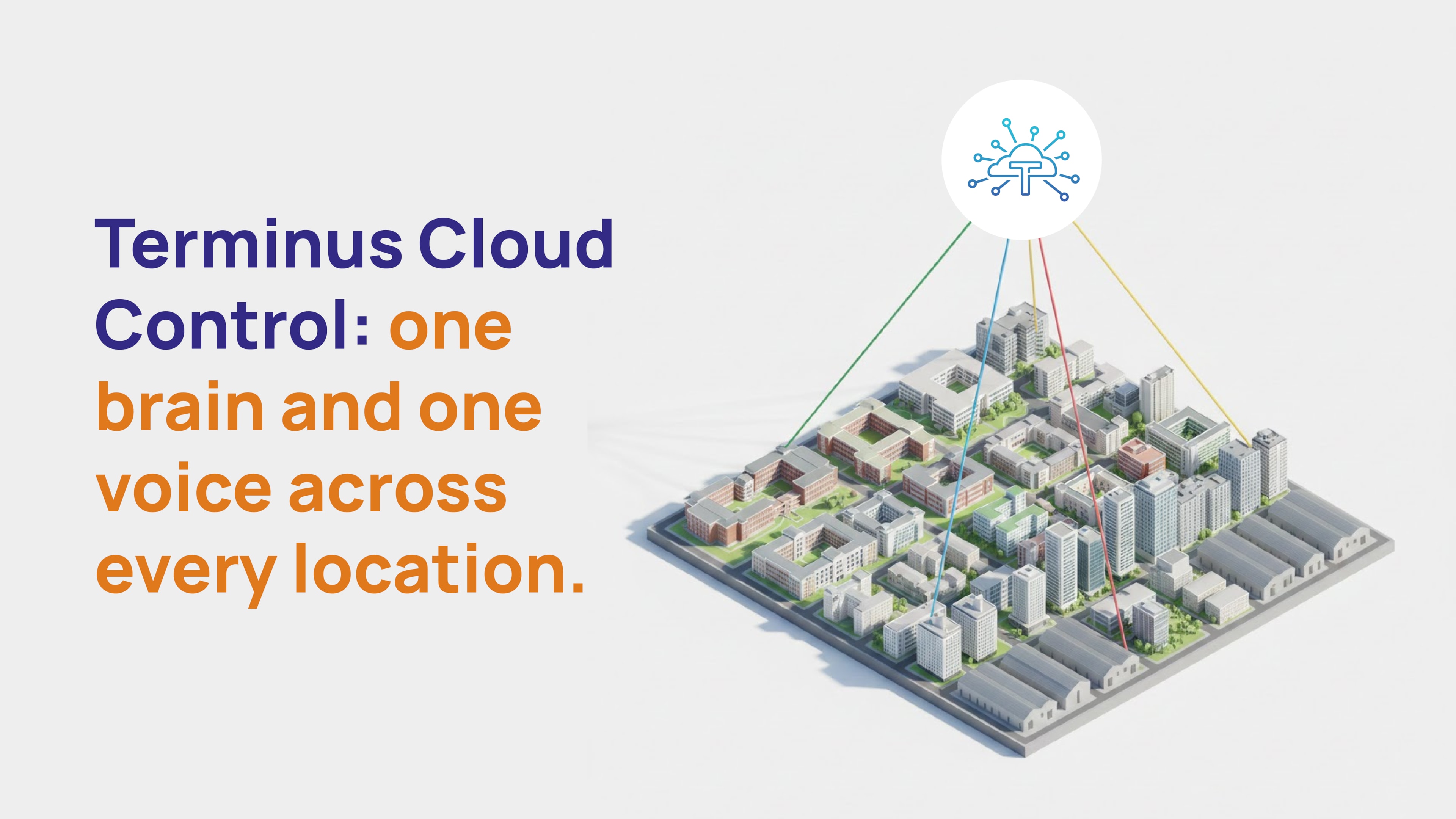
CyberData designed Terminus Cloud Control™ specifically to centralize emergency and routine notifications and to manage the devices that carry those messages.
So instead of one process per building, you get one brain and one voice across every location.
Why Enterprises Need Centralized Alerting Across Every Facility
If you manage multiple locations, you have probably lived through some version of this:
-
One or two sites use a version of an old analog amp, another uses IP speakers, and a third has a mix of both
-
Different stores or campuses run slightly different scripts and processes for the “same” alert
-
IT has no clean way to prove that a critical message reached every area
Those scenarios have moved beyond being messy and have turned into liabilities because they make audits, drills, and real emergencies harder than they should be.
A centralized enterprise alert system lets you:
-
Trigger a message once and reach every site, or just the sites you choose
-
Keep consistent language and tones across regions
-
Monitor device health across the entire fleet, not just one building
-
Scale from a handful of locations to hundreds, without new software in every rack
CyberData’s strategy is built around this idea: one platform, many endpoints. Terminus manages alerts for virtually unlimited facilities and endpoints, while CyberData hardware does the talking on the ceiling, wall, or pole.

Key Capabilities to Look for in a Mass Communication Platform to Keep Your Business Running Smoothly
At the end of the day, the fact is that not all systems are equal. When you evaluate a mass communication platform, look for these capabilities:
1. Unified emergency alerts and routine messaging
You should be able to send lockdowns, severe weather alerts, promos, and shift reminders from the same interface, with clear templates and user-based permissions.
2. Deep integration with paging/intercom
The platform should talk directly to your SIP speakers, intercoms, call buttons, and strobes, not just send SMS or email. That device interconnectivity is how you avoid vendor confusion and finger-pointing.
3. Hybrid analog and IP support
Most enterprises are in between full analog and full IP. Look for support for:
-
Existing 25V and 70V speakers
-
IP endpoints for new zones and visual alerts
-
Bridges that can feed both from the same system
CyberData’s SIP 25V/70V +4 Hybrid Amplifier was built precisely for this “keep what works, add what you need” model.
4. Real time device diagnostics
You should know when a speaker fails before your people do, so it can be fixed or replaced before it's needed most. Then, you need complete access to cloud dashboards, alerts, and remote firmware updates so you can reduce truck rolls and downtime.
5. Strong reliability story
Manufacturer business longevity, warranty, and support matter as much as features. CyberData backs its endpoints with a five-year warranty and provides free design services that include floor plan review, bill of materials, and network diagrams.
How Terminus Cloud Control Strengthens Emergency Response with Enterprise Paging/Intercom
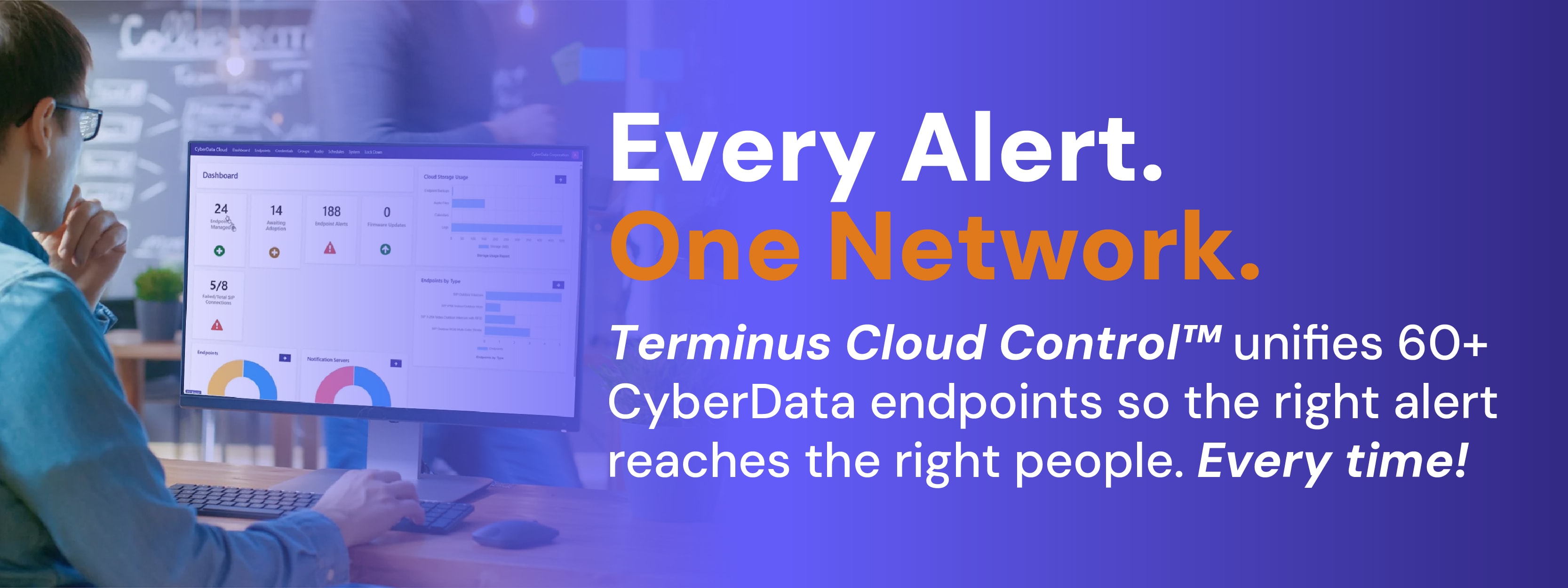
Terminus Cloud Control™ turns your mass notification system into a full command center for paging/intercom. Instead of logging into separate consoles at each location, your teams use a single secure web dashboard to manage everything.
A few practical examples of what Terminus brings:
-
One console for all alerts: Lockdowns, severe weather, all calls, promos, shift change tones. Emergency and non-emergency messages share the same workflows.
-
Real time device monitoring: See which speakers, horns, or amplifiers have issues. Get alerts when temperature, connectivity, or status changes.
-
Remote updates and configuration: Push firmware and configuration changes to groups of devices. Keep hundreds of endpoints aligned without touching each one.
-
Role-based access and logging: Limit who can send which alerts. Keep clear records for drills, safety audits, or Alyssa’s Law and SPAT readiness discussions.
In other words, Terminus is the mass notification system that actually knows your hardware inside and out, not just a messaging app on the side.
The Power of SIP Endpoints + Hybrid Infrastructure
You can’t have one without the other, and that's why a smart cloud platform needs solid hardware. That is where CyberData SIP endpoints and the 25V/70V +4 Hybrid Amplifier come in.
Instead of replacing everything and really putting a dent in your finances, you can:
-
Keep working analog speakers on existing wiring
-
Use the Hybrid Amplifier to feed those speakers while participating in IP multicast groups
-
Add SIP ceiling speakers, wall speakers, intercoms, call buttons, and strobes where you need better coverage or visual alerts
This hybrid approach lets you:
-
Scale paging/intercom across large facilities
-
Add new zones without redoing every cable run
-
Move toward IP at your own pace, site by site
All of this is backed by CyberData’s U.S. engineering, TAA compliance, and a five-year warranty across its portfolio. That combination of hardware reliability and long-term coverage is a big part of why enterprises standardize on CyberData.
Real World Use Cases: Schools, Retail, Warehouses, Manufacturing
Education: One District, Many Campuses
School districts have to protect students and staff across dozens of buildings, often with a mix of old PA systems and new VoIP. With Terminus plus CyberData endpoints, they can:
-
Send districtwide alerts from a browser
-
Let each campus run local drills and bell schedules
-
Reuse legacy speakers with the Hybrid Amplifier while adding IP endpoints in high-priority areas
That combination is especially helpful when aligning with codes like OSHA 1910.165 and NFPA 72 for alarm and signaling practices.
Related reading: School Notification System Best Practices: Keeping Every Student Safe
Retail: Consistent Store Audio Without Starting Over
Retail chains often discover that every store has a different paging/intercom setup. Volumes fluctuate, scripts vary, and nobody can prove a safety alert reached every site. CyberData’s hybrid hardware and Terminus allows your HQ to:
-
Schedule promos and safety announcements chainwide
-
Use Hybrid Amplifiers to keep existing 70V speakers
-
Add IP speakers and call buttons only where they add value
-
Monitor device health and catch failures before big shopping days
Warehouses and Manufacturing: Noisy, High Risk Environments
On a plant floor or in a distribution center, clarity and coverage matter. With CyberData, teams can:
-
Use loud SIP horns and strobes in noisy zones
-
Schedule safety reminders and production change notices
-
Use diagnostics to avoid silent failures that stop lines or delay trucks
In all of these cases, the key pattern is the same: cloud control on top, reliable SIP and hybrid hardware underneath.
Check out CyberData's Customer Success Stories

Why Organizations Choose CyberData for Enterprise Alert Systems
It’s no secret that there are many vendors who offer parts of the notification puzzle. Some focus on software only, while others only make hardware and rely on third-party platforms. CyberData is different:
-
Hardware and cloud in one ecosystem: Terminus Cloud Control™ manages CyberData endpoints natively, with full device telemetry and control.
-
Dependable by design: Five-year warranty across endpoints and 50+ years of U.S. engineering and TAA-compliant manufacturing.
-
Partner first simplicity: Free Design Services handle floor plans, device placement, bill of materials, and network diagrams before you buy. This level of detail lowers the risk for IT, facilities, and security teams who cannot afford guesswork on safety systems.
-
Hybrid analog to IP path: The SIP 25V/70V Hybrid Amplifier lets you modernize without ripping out working speakers, which keeps budgets under control.
When you combine those pieces, you get a mass notification system that is easier to deploy, simpler to manage, and built for the long haul.
There’s No Time Like the Present to Modernize Your Mass Notification System
If you are responsible for safety or operations across multiple locations, your paging/intercom network is too important to leave to chance. Take a step to lighten your load with a modern mass notification system that ties directly into your audio endpoints, which can:
-
Shorten response times
-
Improve clarity and coverage
-
Reduce surprise failures and after-hours truck rolls
-
Give you a clear, documented workflow for both emergencies and everyday communication
CyberData and Terminus provide the hardware, cloud intelligence, and design support to get you there without a messy rip-and-replace.
Your next step is simple:
-
Map the alerts and announcements you actually need
-
Decide where you can reuse analog speakers and where IP endpoints will help
-
Contact CyberData to scope a powerful solution and request a free design review with floor plans, device layouts, and a ready-to-order bill of materials
With the right partner and the right platform, you can turn paging/intercom from a weak spot lurking around every corner into a strength across every facility.