


Quick takeaways
If you’re planning a new build or expansion, mass notification system design should happen before walls close and ceilings get sealed.
-
SIP endpoints are not “just devices.” They live on your network and inside your life-safety workflow.
-
Design decisions get locked early. Power, cabling, zoning, audibility, and network segmentation are expensive to fix later.
-
Standalone paging/intercom creates blind spots. The system may work until you need it to scale, prove it worked, or update it fast.
-
Centralized management is part of future-proofing. If you can’t manage endpoints at scale, growth becomes chaos.
-
Free Design Services can prevent rework. Floor plan review + placement + BOM + network diagrams = fewer surprises.
The Day-One Notification Platform Problem Nobody Wants to Talk About
The excitement of a newly constructed building is usually a Top 3 moment for any business. Most see it as a sign that you’ve made it, and rightfully so. There’s overwhelming anticipation about opening the new building and removing the protective paper covering the shiny floors. But the fresh paint still needs to finish drying, and all the networking has to finish its prelaunch tests, so the anticipation is mounting. Soon, there’s a hitch in your giddy-up as the paging/intercom system isn’t functioning as needed, and the project is poised for delays.
The reality is:
-
A fire marshal asks about testing records.
-
Facilities asks why the warehouse can’t hear announcements over the machinery.
-
IT discovers the endpoints were dropped onto the wrong VLAN.
And then someone remembers the question that popped up late in the installation stage that’s causing the issues now:
“Can we just add a few more speakers after occupancy?”
That misstep in planning will force a delay and add costs, so lifts can be brought back in, additional ceiling work, cable runs, downtime, and testing can be properly completed. It doesn’t ruin the excitement, but it definitely puts a damper on the postponed grand opening celebrations.
This scenario is exactly why mass notification system design belongs in the design phase, when you can still make smart decisions that keep projects on schedule and on budget.

Why SIP Endpoints Matter with an Emergency Mass Notification System
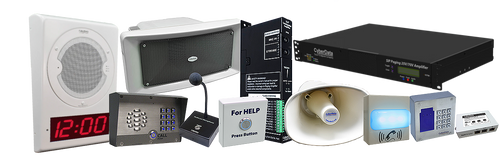
SIP endpoints (speakers, intercoms, call/alert buttons, visual alerts) are now part of the same conversation as:
-
Emergency messaging
-
Daily paging/intercom
-
Security workflows
-
Network reliability
-
Long-term device management
In other words, SIP endpoints and their analog counterparts using a 25V/70V hybrid +4 amplifier are vital pieces of infrastructure.
When organizations treat SIP endpoints like last-minute bonus accessories, the result is predictable:
-
Inconsistent coverage
-
Complicated management
-
No visibility into failures
-
Industrial or campus notification systems that don’t scale across properties
CyberData’s approach is built around the idea that endpoints and control should work together, hardware plus cloud-native management, so the system stays consistent and manageable as you grow.
The Risk of Treating SIP Devices as Standalone Components
A standalone or isolated paging/intercom setup often fails in slow motion. It doesn’t explode all at once; it just becomes painful and isn’t viewed as a valuable piece of your system:
-
No standard design rules: Each floor, building, or contractor does it differently.
-
No clean expansion path: A new wing means redesigning zones and network capacity.
-
No easy proof: When audits or incidents happen, assuming an alert was sent without the ability to confirm it isn’t good enough.
-
No clean maintenance plan: Firmware, configs, credentials, and replacements become a spreadsheet nightmare.
OSHA’s employee alarm system requirements include expectations around maintenance, testing, and inspection for alarm signaling used to alert employees. If your system design makes testing hard, you’re setting yourself up for ongoing operational friction.
Check out our recent article, Is Your Emergency Notification System Putting People at Risk?, to learn more about lowering your risks with a proper emergency notification system.

Designing Paging and Intercom to Keep People Safe and for Long-Term Scalability
The goal is to see speakers, strobes, and other endpoints just as important as Wi-Fi routers, desks, and coffee makers. Building a system that still behaves five years after occupancy, when designed properly, should be commonplace.
Here’s what a scalable mass notification system design tends to include:
1) Clear zoning rules that won’t collapse later
-
Zones by risk, function, and acoustics
-
Priority rules that are clear on who can override what, and when
-
Defined emergency vs. routine messaging paths
2) Network architecture that expects growth
-
Correct VLAN placement and QoS planning
-
PoE budgeting that leaves room for growth and isn’t designed right up to the edge
-
Switch port capacity in IDFs where endpoints actually land
3) A management model that doesn’t require moving mountains
If your future plan depends on one person remembering how it was configured, that’s not a plan. Centralized control matters because expansion is a certainty. New wings will be needed. Space gets repurposed. More endpoints get added. A system that can’t standardize and manage endpoints at scale becomes fragile fast.
How Commercial Wired Paging Systems Fit into Modern Architectures
A commercial wired paging system is still a practical foundation, especially when you plan it correctly and tie it into modern controls.
Even in new construction, wired paging can be the right call for reliability, coverage, and predictable performance. The key is designing it as part of the broader notification architecture, not as a separate island.
If you’re blending approaches, it could be wired paging plus SIP endpoints. The design phase is where you decide:
-
What gets hardwired
-
What gets an IP-based connection
-
How zones map across both
-
How the organization will manage all of it without duct tape
The Role of Centralized Management in Future-Proof Designs and Emergency Response
If SIP endpoints are on your network, you’ll eventually need to:
-
Update firmware
-
Adjust zone behavior
-
Standardize configurations
-
Actively monitor device health so failures don’t sneak up on you
-
Manage permissions and workflows across sites
That’s why centralized management is a major component of future-proofing. A platform approach also supports more consistent operations: one way to send alerts, one way to schedule routine messages, one place to see what’s online and healthy.
Why Early Design Services Prevent Costly Retrofits
CyberData’s Free Design Services are built for this exact moment, when you’re early enough in the project to avoid rework.
Our expert team can review floor plans and provide:
-
Scope of work
-
Bill of materials (BOM) with MSRP estimates
-
Device placement on your blueprint/floor plan
-
Network connectivity diagrams
-
PBX interop/configuration guides
We’re huge proponents of providing a service with no agenda other than ensuring real project risk reduction.
What gets cheaper when you design early
-
PoE and switch capacity planning
-
Proper endpoint placement with clear coverage, audibility, and visibility taken into account
-
Fewer change orders
-
Fewer surprise cable paths and conduit issues
-
Fewer compromises that turn into permanent problems
What Breaks Later if You Skip the Mass Notification System Design Step
|
Design-phase decision |
If you skip it now |
What it costs later |
|
Zoning + priority rules |
Confusing paging/intercom behavior |
Rework, retraining, safety risk |
|
Network + VLAN planning |
Endpoints fight for bandwidth or land in the wrong place |
Troubleshooting, redesign, outages |
|
PoE + switch capacity |
“We ran out of power/ports” |
New switches, new runs, delays |
|
Placement based on coverage |
Dead zones, poor audibility |
Lifts, ceiling work, patch fixes |
|
Centralized management model |
Manual configs across buildings |
Drift, failures, slow response |
Questions to Ask Before Construction Locks You In
Use these in your next design meeting:
-
Was endpoint management designed into our enterprise notification platform from day one?
-
How will paging/intercom behave five years after occupancy?
-
What breaks first when buildings expand or reconfigure?
-
How do we test, maintain, and prove alerts worked?
-
Did we do a risk analysis for mass notification needs?
External Guidance Worth Citing in Your Project Notes
You don’t need to become a code expert overnight. But you should anchor your design decisions in real guidance:
-
OSHA 29 CFR 1910.165: employee alarm systems; maintenance/testing expectations
-
NFPA 72 Chapter 24: Emergency Communications Systems/mass notification requirements
-
CISA SAFECOM guidance: Planning, interoperability, and cybersecurity considerations for emergency communications investments
-
FEMA IPAWS best practices: How alerting succeeds when it’s planned and structured
These sources won’t design your building for you, but they will help inform you so you can avoid surprises.

A Practical, Free Mass Notification System Design is Just What the Contractor Ordered
If you’re in new construction, a campus expansion, or even in the early planning stages for a multi-site rollout, don’t wait until the ceiling grid is up to design your notification system.
Bring CyberData in as early as possible. Upload your floor plan and request a FREE design review so you can lock in a system that scales, stays manageable, and avoids expensive retrofits from the beginning.